The Quad-Master®
Ball Valve
The Quad-Master® Ball Valve has over 20 years of proven performance in numerous applications across the power, oil & gas, refinery, mining, steel, chemical, geothermal and petrochemical industries.
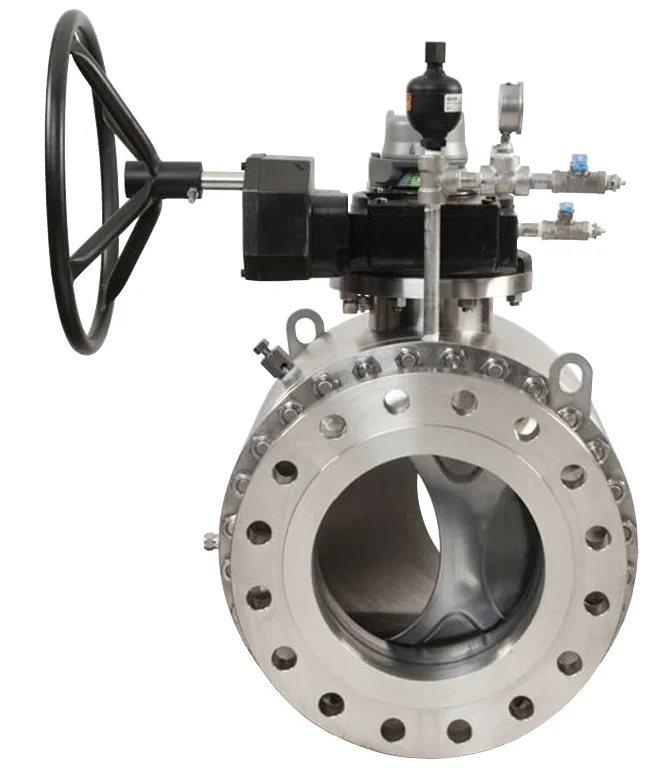
Not a typical ball design
Select a callout to explore how each engineered surface contributes to self-flushing, low torque and long service life.
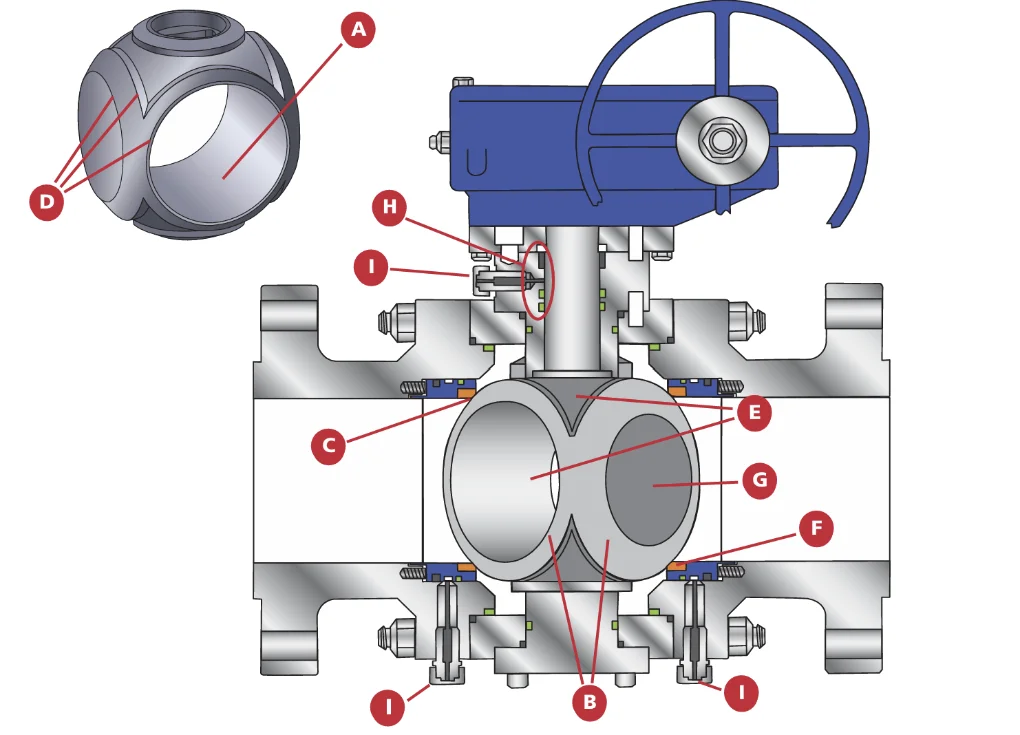
Quad-Master® Ball
Unique contoured full-port ball adds 4 additional flow paths — over, under and around the sides — for self-flushing the ball cavity.
Self-cleaning by design
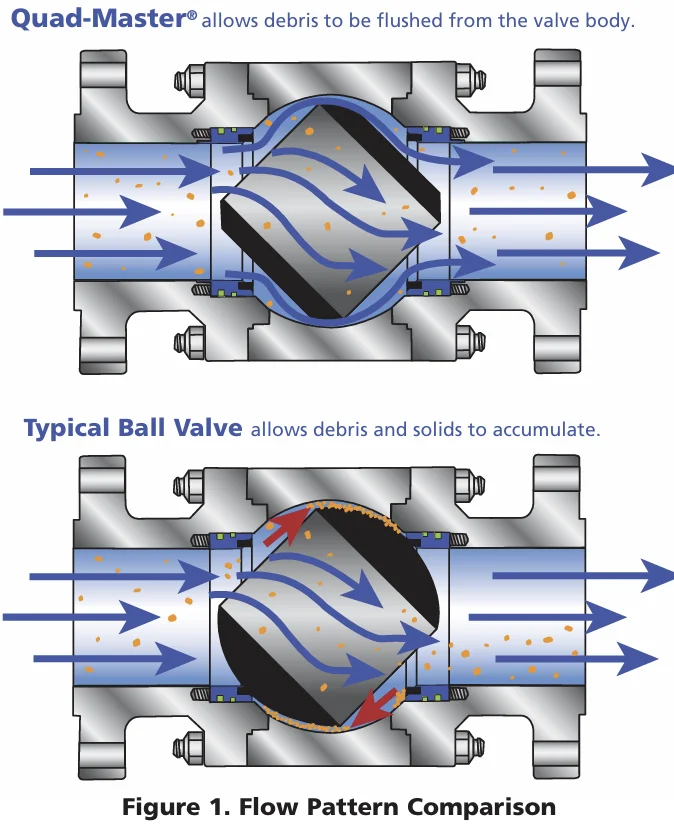
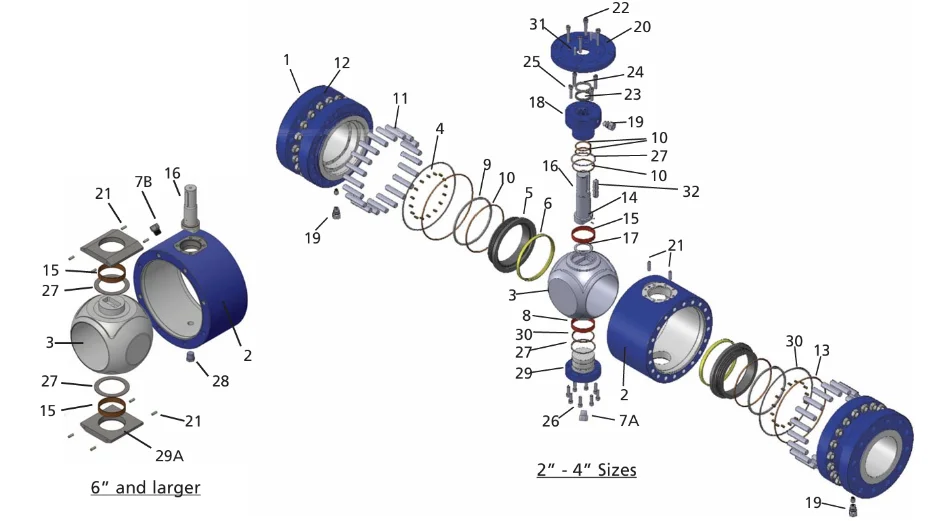
Self-Cleaning Features
Typical ball valves allow liquids and solids to be trapped within the body/ball cavity, resulting in solids accumulating around the ball that can cause clogging and/or damage to the seating surfaces.
When the Quad-Master® Ball cycles, its unique 4 recessed surfaces allow solids to be flushed from the body/ball cavity to prevent buildup of solids around the back of the seat rings and bearings.
Protected Seating Surfaces
The ball protects its seats from media velocity by minimizing contact of the upstream seating surfaces during cycles. When closed, media pressure pushes the upstream seat ring against the ball’s sealing surface for leak-tight performance.
Lower Torque Requirements
Contour machining of the ball substantially reduces ball-to-seat surface contact, creating less resistance during cycles and lowering the torque required to operate the valve.
Anti-Blowout Stem
The stem has an integral collar to prevent the stem from being ejected from the valve while under line pressure, per API 6D and ASME B16.34 standards.
Stem Seals & Bearings
The area around the stem seals and bearings is flushed clean each time the valve cycles, helping eliminate solids build-up that can damage the seals and bearings during operation.
Body & Ball Construction
The body and ball are forgings, providing superior surface finish and structural integrity. Forgings prevent defects associated with castings such as pitting, sand inclusions, porosity and the need for weld repairs.
Industry Compliance
Designed per API 6D and ASME B16.34. The valve carries the API 6D Monogram and is certified to API 607 Fire Test. Meets API, ASME/ANSI, BS, ISO, MSS and NACE standards.
Seating & sealing
Independent floating seat rings with resilient inserts and secondary metal-to-metal seating deliver bi-directional shut-off in single- or double-piston configurations.
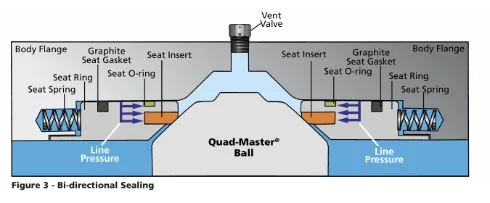
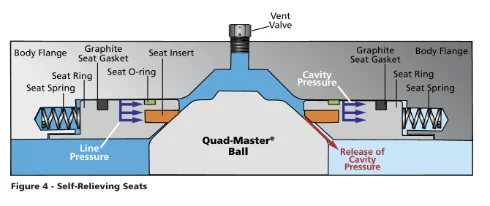
Single Piston Effect Seating API 6D DBB
Floating seats are activated by springs and line pressure to seal tightly against the ball. An O-ring on the outside diameter and a resilient seat insert create a piston-effect area; upstream and downstream line pressure force the seals against the ball.
If cavity pressure exceeds line pressure, the piston effect reverses and automatically relieves overpressure. Defined in API 6D as Double-Block-and-Bleed (DBB); vent and drain connections verify seat integrity in service.
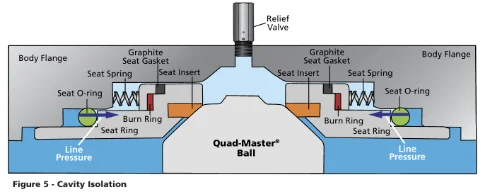
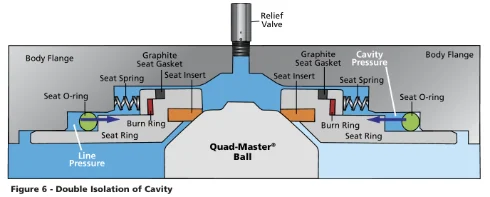
Double Piston Effect Seating API 6D DIB
An enlarged O-ring groove allows the seal to be activated bi-directionally by either line or cavity pressure. Cavity pressure is connected to the opposite O-ring seal, forcing both seats against the ball for positive double isolation.
An automatic cavity pressure relief device prevents overpressure from thermal expansion. Defined in API 6D as Double-Isolation-and-Bleed (DIB), available in one or both directions.
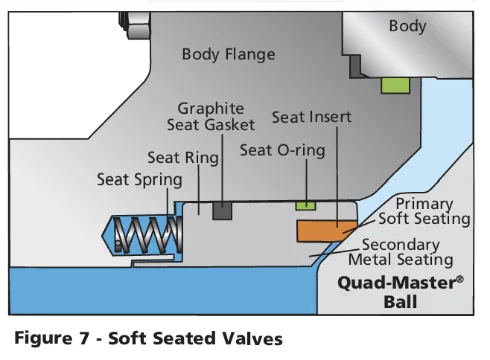
Soft Seated & Bi-Directional
Two independent floating seat rings with resilient inserts provide primary soft seating plus secondary metal-to-metal seating. Seals with line pressure from either direction — no installation orientation required.
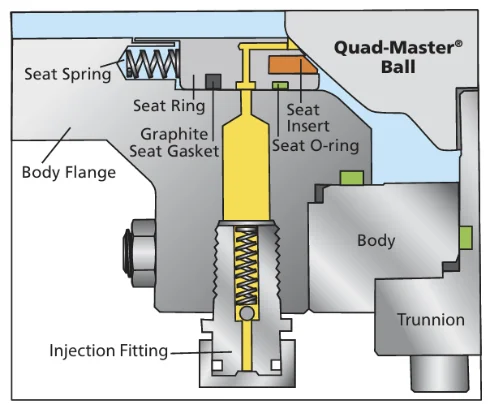
Emergency Sealant Injection
Standard on all 6 NPS and larger single-piston valves. If a seat insert or stem seal is damaged, sealant can be injected to temporarily seal the valve until repairs can be made.
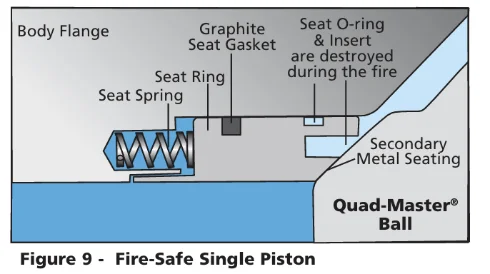
Fire-Safe — Single Piston
Certified to API 607. During a fire the seat insert and O-ring are destroyed; the graphite seat gasket and secondary metal seat remain to seal off the media.
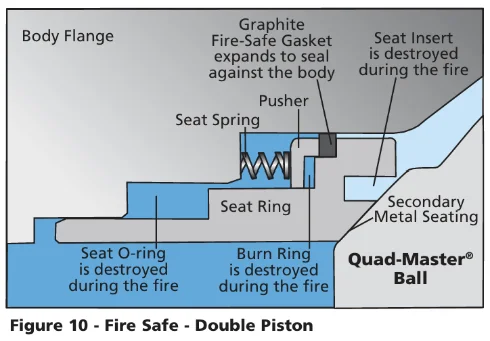
Fire-Safe — Double Piston
After a fire the burn ring melts away, permitting the graphite pusher to compress the gasket against the body to create a seal. This design does not permit emergency sealant injection.
Seat Master®
Shut-off for solids-laden media
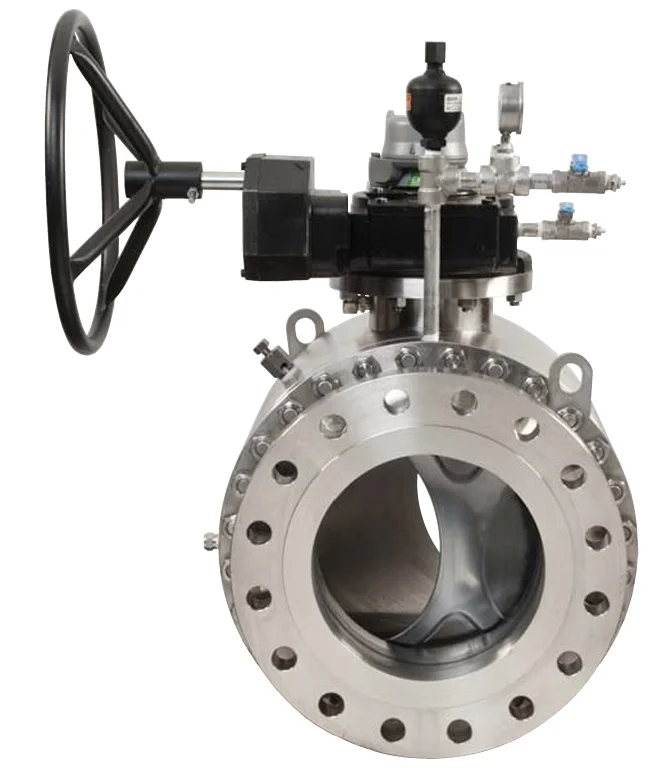
The Seat Master® provides excellent shut-off and ease of operation when sand, scale, powders and other solids are present in the media. A dynamic, pressure-energized seat insert is energized with a clean, independent external pressure source, delivering bi-directional shut-off and positive double-isolation (DIB) service.
Pressure-energized seat insert
Because the pressure behind the dynamic seat is higher than line pressure, there is no ingress of media into the seat cavity, ensuring free axial movement of the seat against the ball under all process conditions. An automatic cavity pressure relief device prevents overpressure from thermal expansion.
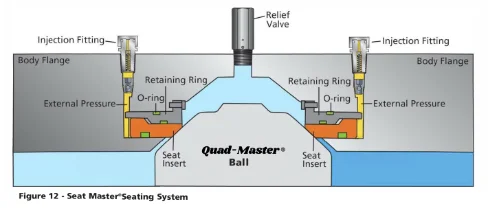
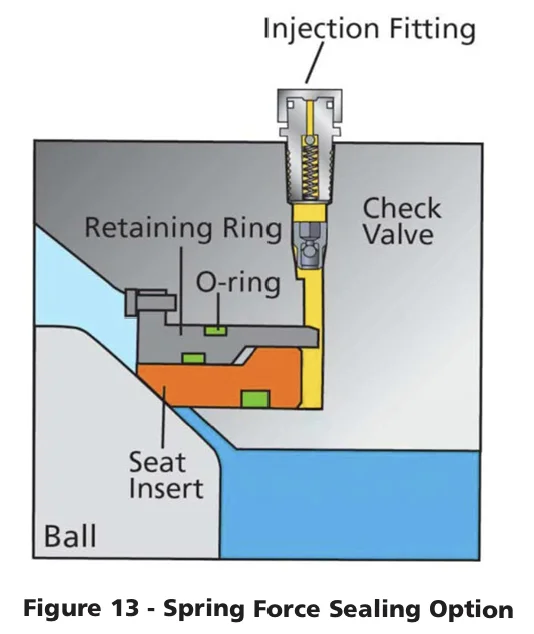
Spring Force
Wave springs and external pressure seal the seat tight against the ball. An injection fitting can add seating force or act as an emergency backup; an internal check valve allows fitting removal.
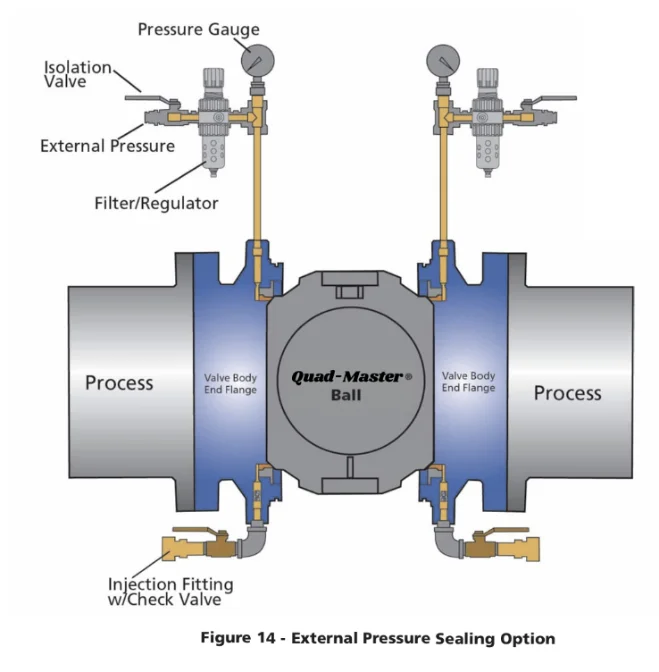
External Pressure
Air, nitrogen, grease or other clean fluid powers the seat insert. The external pressure should be at least equal to the expected process pressure; the fluid can be filtered and regulated.
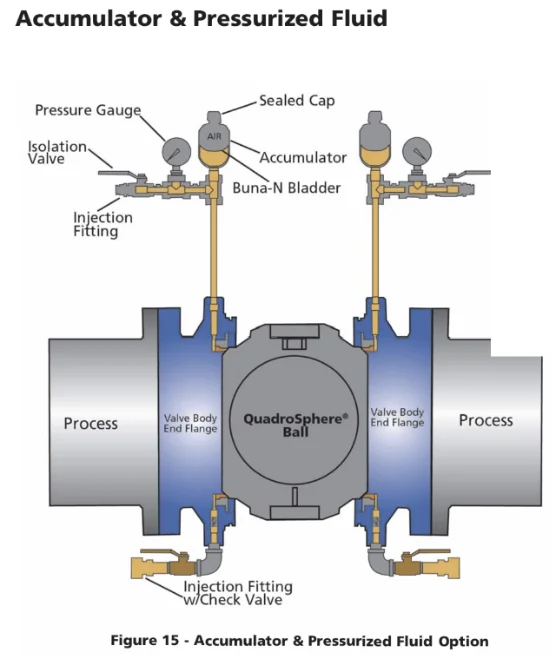
Accumulator & Pressurized Fluid
For solids-laden process fluid, an independent compatible sealant pressurizes the seat insert. A pre-charged accumulator maintains sealing pressure for extended periods, independent of process changes.
Proven across severe service
Materials of construction
Product scope & ratings
O-Ring: Aflas®, HNBR, Chemraz®, Markez®, Kalrez®, Viton®, Viton® AED, FF200, Graphite.
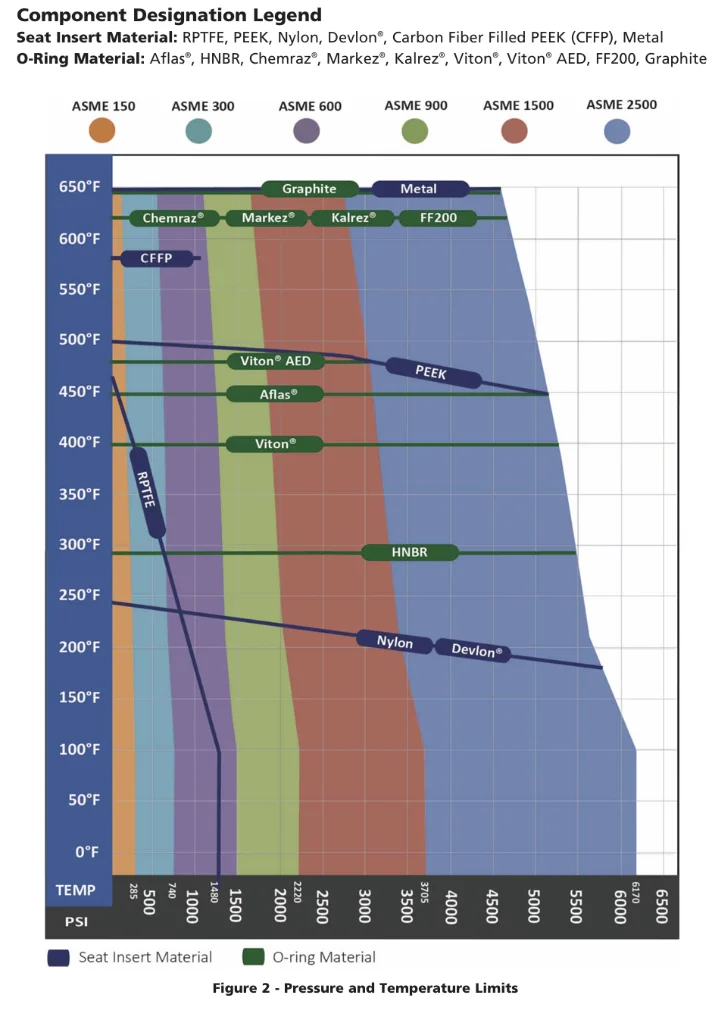
Extended bonnet, double piston effect seats w/ relief valve, special coatings, NACE. Low-pressure seat tests per customer requirements.
Standard: Flanged. Optional: Butt Weld or Ring Tongue Joint (RTJ).
| Material / Temp | 150 | 300 | 600 | 900 | 1500 | 2500 |
|---|
| NPS | 150 | 300 | 600 | 900 | 1500 | 2500 |
|---|
Trunnion design · 2 thru 24 NPS
Dimensions in inches (mm). Select a pressure class to view its dimension table.
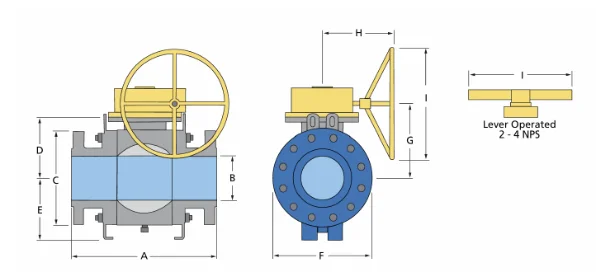
2. Additional materials & configurations available — contact factory.
| NPS (DN) | A | B | C | D | E | F | G | H | I | Wt lb (kg) |
|---|
Configure your valve
Choose an option in each field to assemble a complete Quad-Master® model number in real time.
Quad-Master® trunnion-mounted full-port ball valve
Download literature
Access the complete Quad-Master® Ball Valve product catalog for full specifications, dimensions and engineering data.
Let’s talk about your application
Reach out for sizing, material selection, quotes and lead times — we’ll help you specify the right valve for your service.
Itasca, Illinois 60143